Cold-Chain Doors
Egis BlastSwing B170H
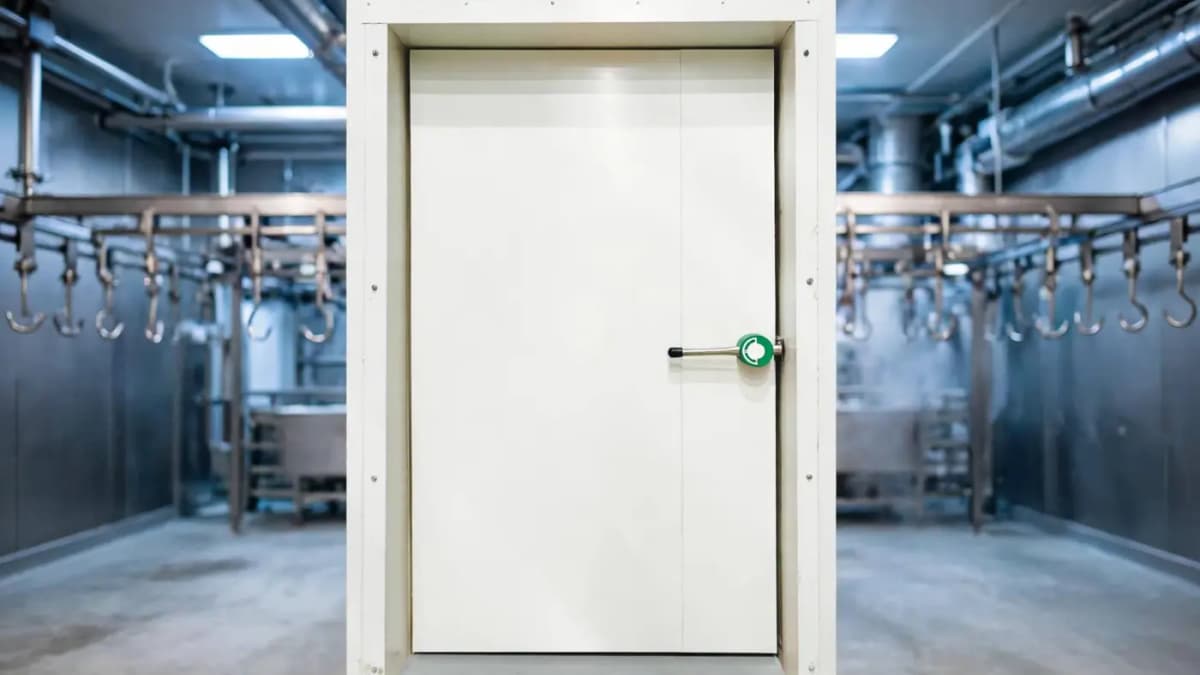
Hinged blast-freezer door for -40 C — 170 mm insulation and frost-proof hardware built for thermal shock.
Hinged blast-freezer door for -40 C rapid-freeze rooms, with 170 mm insulation and frost-proof hardware that survives thermal shock.
Overview
Blast freezing is the harshest duty a door sees: -40 C air, thermal shock on every opening, and frost that defeats ordinary hinges and latches in weeks. The BlastSwing B170H is the hinged version of the BlastShield B170 slider, built around the same 170 mm PIR insulation core and a frost-proof hardware package specified for -40 C service.
Every metal part that moves is rated for the duty, not adapted to it — the cam-lift hinges, the latch mechanism and the gasket heaters are all specified for -40 C operation. The threshold is heated, the gaskets are dual and heated, and the inside safety release is designed to be found and operated in full freezer PPE, where dexterity is minimal and visibility is poor.
Egis recommends the B170H for blast-freezer cells, spiral-freezer infeed rooms and plate-freezer anterooms. Clear openings run from 800 to 1400 mm wide and 2000 to 2600 mm high. For high-cycle automation at the same temperature, the BlastShield B170 slider is the companion product.
How hardware survives -40 C thermal shock
At -40 C, ordinary hardware fails in two ways: metals embrittle and lubricants solidify. A hinge that works at room temperature can snap or seize after weeks of blast-freeze cycling, and a latch adapted from a chiller door will freeze at exactly the moment it is needed. The B170H's hinges, latch and gasket heaters are specified for -40 C from the start — materials, clearances and lubricants chosen for the duty — so thermal shock is a design condition, not a surprise.
The seal line gets the same treatment. Dual heated gaskets hold the leaf perimeter above freezing while the heated threshold keeps the doorway ice-free, because at -40 C any moisture that reaches an unheated seal becomes ice within minutes. The 170 mm core keeps the leaf faces warm enough to avoid the condensation that would otherwise sheet the door in frost on the warm side.
- Rated to -40 C with a 170 mm PIR insulated leaf
- Frost-proof hinges, latch and heaters specified for -40 C — not adapted
- Dual heated gaskets plus heated threshold
- Survives blast-freeze thermal shock cycles
- Safety release operable in full freezer PPE
- Companion to the BlastShield B170 slider for automated openings
Applications
Blast-freezer cells
Hinged access for cells where the door cycles with each batch load.
Spiral-freezer infeed rooms
Holds -40 C at the infeed where product enters the spiral.
Plate-freezer anterooms
Compact swing format suits anteroom geometry.
IQF processing halls
Frost-proof hardware survives the thermal shock of IQF line duty.
In detail
Frequently asked questions
Every opening cycle exposes the door's hardware and seals to a rapid swing from ambient to -40 C and back. Materials expand and contract, moisture flash-freezes, and lubricants thicken. Thermal shock is this repeated cycling — and it is what destroys hardware that was only designed for steady cold.
Because it fails at -40 C. Standard hinges embrittle, standard latch lubricants solidify, and standard gasket heaters cannot hold the seal line against blast-freeze moisture loads. The B170H's moving parts are specified for -40 C service from the start — materials, clearances and heaters chosen for the duty.
The heaters are low-voltage circuits sized to hold the seal line just above freezing — a small, steady load, not a heating system. The exact draw is confirmed in the door's electrical specification at order stage.
Yes — that is the design brief. The release is luminous and oversized, operable with the heavy gloves and limited dexterity of full freezer PPE.
Clear openings from 800 to 1400 mm wide and 2000 to 2600 mm high, in food-safe GRP or coated steel with a stainless option.
More often than on a chiller door — frost, thermal cycling and heater duty all wear the seal. Egis recommends cycle-count-based inspection with the dual heated circuits checked electrically at each service, and replacement at the first sign of compression set.
Related door systems
Cold-Chain Doors
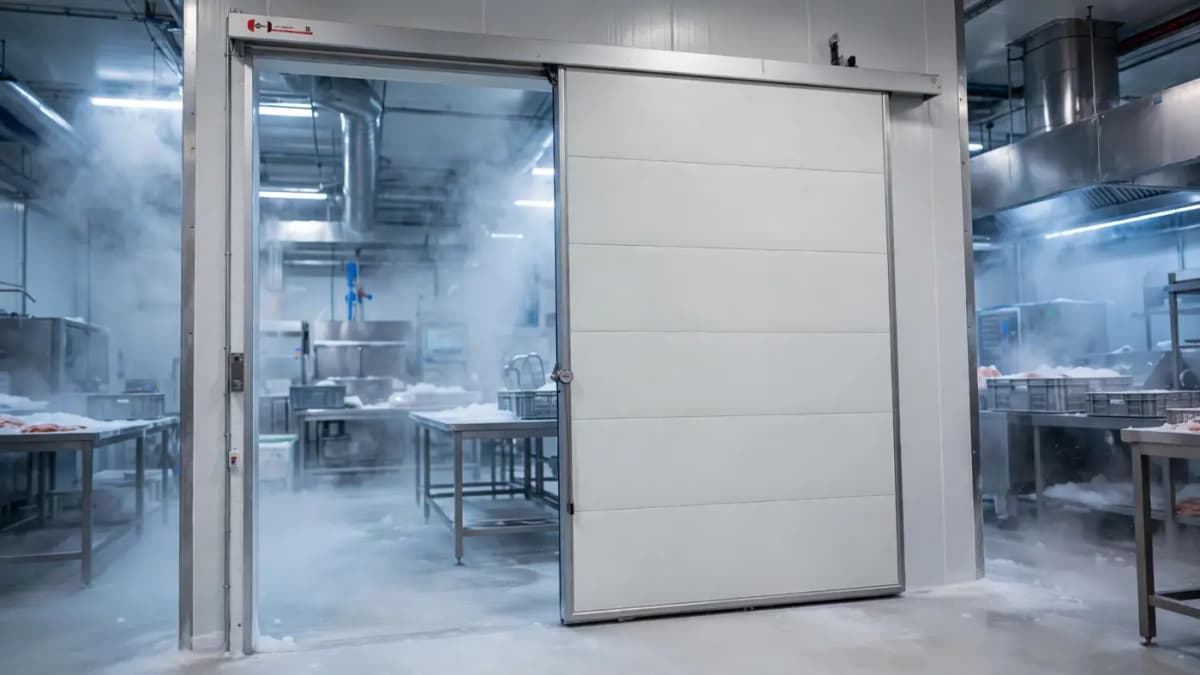
Egis BlastShield B170
- Sliding door system
- Airtight sealing
- Low-temperature duty
Heavy-duty blast-freezer door rated to -40 C with a 170 mm insulated leaf for rapid-chill tunnels and blast cells.
View specifications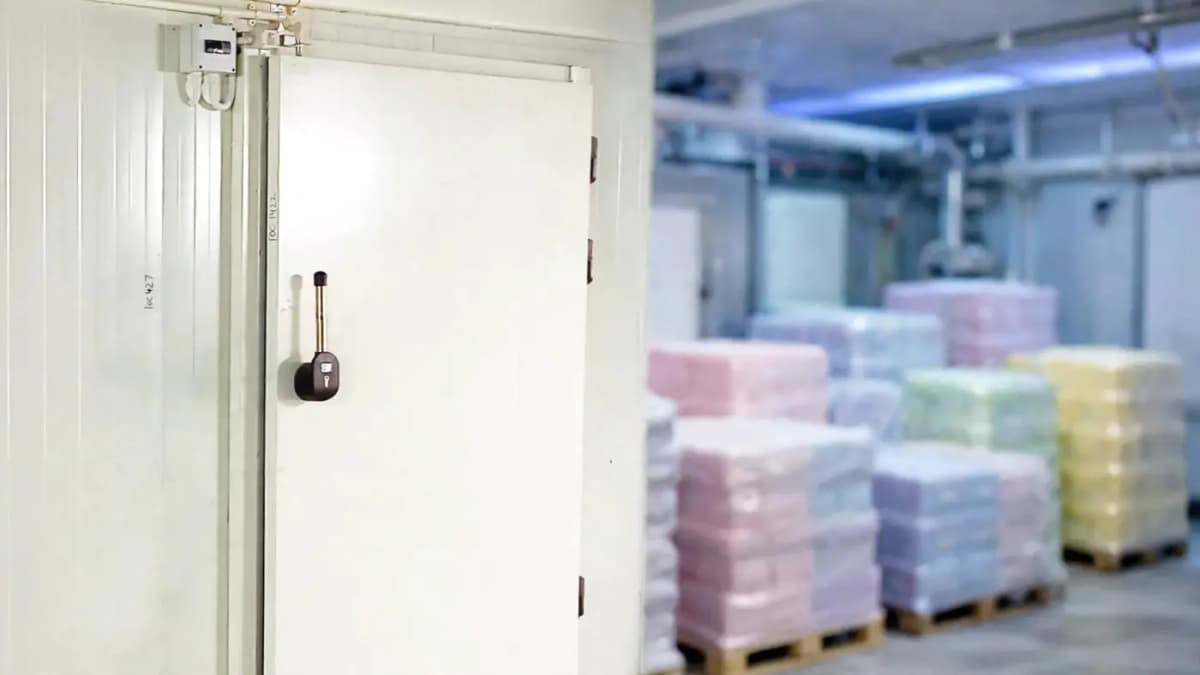
Cold-Chain Doors
Egis FrostSwing F120H
- Hinged door system
- Low-temperature duty
- Completely smooth finishing
- Water-resistant
Hinged freezer door rated to -28 C, with 120 mm insulation, dual heated gaskets and a heated threshold for dependable frozen-store access.
View specifications