Cold-Chain Doors
Egis GasTight CA200
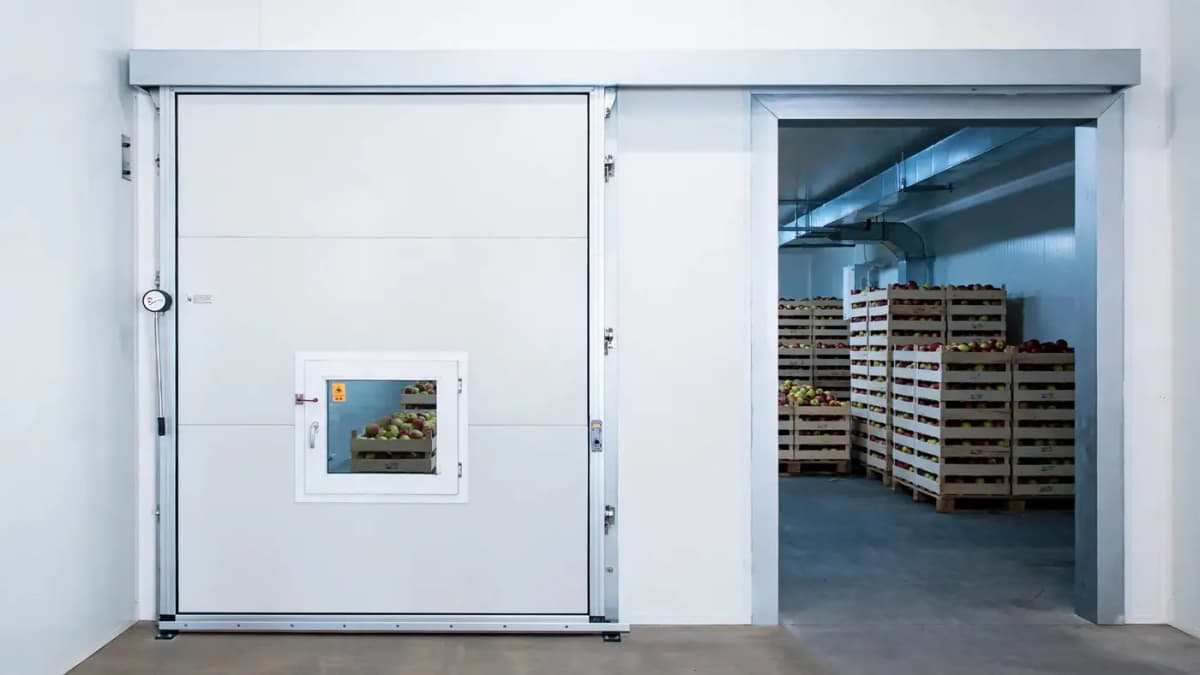
Gastight door for controlled-atmosphere chambers, with inflatable seals.
Gastight sliding door for controlled-atmosphere chambers, with inflatable perimeter gaskets and an integrated inspection and escape hatch.
Overview
Controlled-atmosphere (CA) and ultra-low-oxygen chambers preserve fruit, vegetables and seeds for months by holding the air itself to a recipe — oxygen at 1–3%, the rest nitrogen and CO2. The chamber is only as good as its seal: a conventional insulated door leaks atmosphere continuously, and the nitrogen generator runs forever to compensate. The GasTight CA200 is Egis' gastight insulated sliding door, sealing with inflatable perimeter gaskets that press the leaf against the frame under air pressure.
Inflatable sealing is the step beyond compression gaskets. When the door closes, the hollow EPDM gasket around the full perimeter inflates, conforming to the frame and the leaf with uniform pressure on all sides — including the floor. The seal is verified by pressure-decay testing: the chamber is pressurised slightly and the decay rate measured, proving the tightness as a number rather than asserting it. A 200 mm polyurethane leaf insulates the 0 to +15 C band, and corrosion-resistant hardware survives the humid CA environment.
Because a gastight chamber is a confined, low-oxygen space, safety is designed in: the CA200 carries an inspection and escape hatch so personnel are never trapped, and the gasket deflates for manual opening if needed. Operation is manual with a powered option. Openings run 1000 to 2500 mm wide and 2100 to 3000 mm high for Indian apple, citrus and seed-storage CA chambers.
How inflatable gaskets achieve gastightness
A compression gasket seals as well as its contact pressure is uniform — and on a large sliding leaf, it never is perfectly uniform. The inflatable gasket sidesteps the problem: a hollow EPDM profile around the full perimeter inflates to 0.5–1 bar after closing, pressing outward against both leaf and frame with self-equalising pressure. Minor frame irregularities, which would defeat a compression seal, are simply conformed to. Deflate the gasket and the door slides freely; inflate it and the chamber is sealed.
Tightness is proven by pressure-decay test, the standard method for CA chambers: the sealed room is brought to a small positive pressure and the pressure fall over time is measured against the acceptance criterion. Egis commissions the door to the chamber's specified decay rate, so the nitrogen plant is sized to a known leak rate instead of an unknown one.
- Inflatable full-perimeter EPDM gaskets — self-equalising seal pressure on all sides
- Pressure-decay tested tightness, commissioned to the chamber's specified rate
- 200 mm high-density polyurethane leaf for 0 to +15 C CA duty
- Inspection and escape hatch — personnel safety in low-oxygen chambers
- Corrosion-resistant hardware for humid CA environments
- Manual operation with powered option; 1000–2500 mm W x 2100–3000 mm H
Applications
Apple and fruit CA stores
Ultra-low-oxygen storage for apples, pears and citrus in Indian CA chambers.
Seed storage
Gastight envelopes for long-term seed vaults and gene banks.
Modified-atmosphere ripening
Sealed rooms for controlled ripening and degreening operations.
Pharma inert storage
Low-oxygen storage for oxygen-sensitive pharma materials.
In detail
Frequently asked questions
A CA chamber stores produce in a precisely controlled gas mixture — typically 1–3% oxygen with elevated CO2, the balance nitrogen — at 0 to +15 C. Low oxygen slows respiration and ripening dramatically, extending storage life from weeks to months. The chamber only works if it is gastight: leaks let oxygen back in and the atmosphere recipe fails.
By pressure-decay testing. The sealed chamber is pressurised to a small positive pressure and the rate of pressure fall is measured over time. The result is a number — not an opinion — and Egis commissions the CA200 to meet the chamber designer's specified decay rate.
They use the inspection/escape hatch, which is a mandatory safety feature of the CA200: a gastight chamber at ultra-low oxygen is a confined space, and the door is designed so personnel can always exit. Operating procedures must still treat CA chambers as confined spaces with entry permits.
Yes. The gasket deflates without power and the leaf slides manually. The powered option is for convenience and large leaves; the manual mode is the fallback and is tested at commissioning.
Because 'good' is not measurable. CA economics depend on a known, tested leak rate — the nitrogen generator and the storage life both follow from it. Only a gastight door with pressure-decay verification gives the chamber designer that number.
Clear openings 1000 to 2500 mm wide and 2100 to 3000 mm high. The 200 mm leaf suits the 0 to +15 C CA band; chambers outside this band are engineered to order.
Related door systems
Cold-Chain Doors
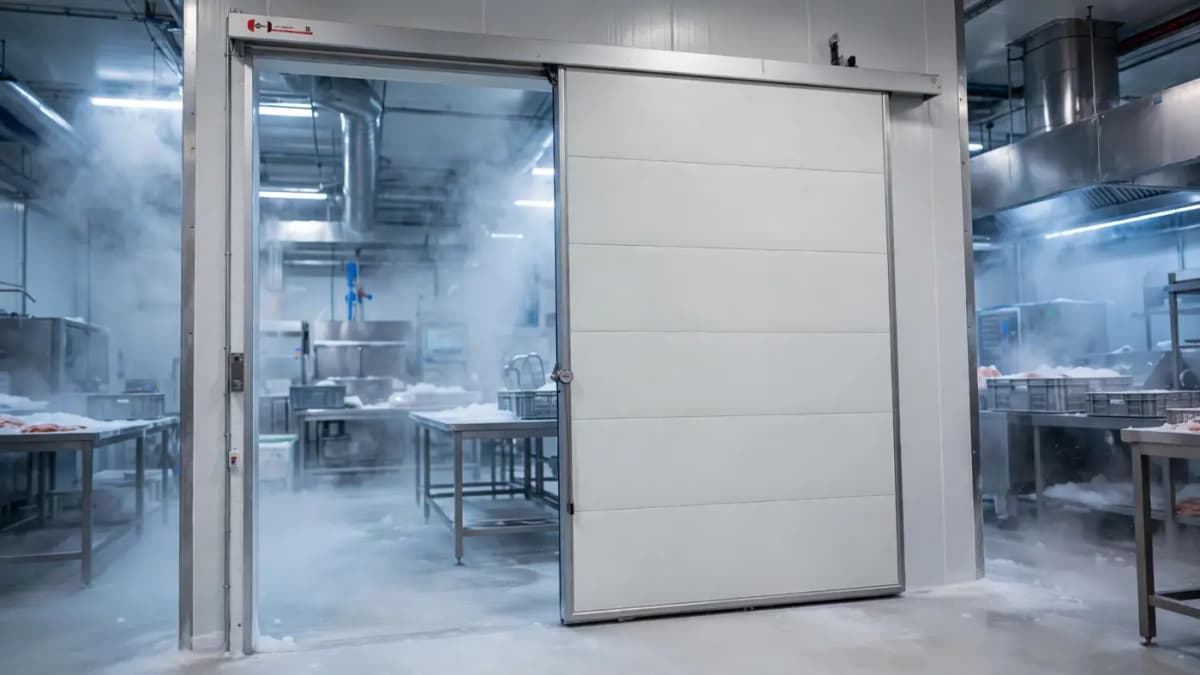
Egis BlastShield B170
- Sliding door system
- Airtight sealing
- Low-temperature duty
Heavy-duty blast-freezer door rated to -40 C with a 170 mm insulated leaf for rapid-chill tunnels and blast cells.
View specifications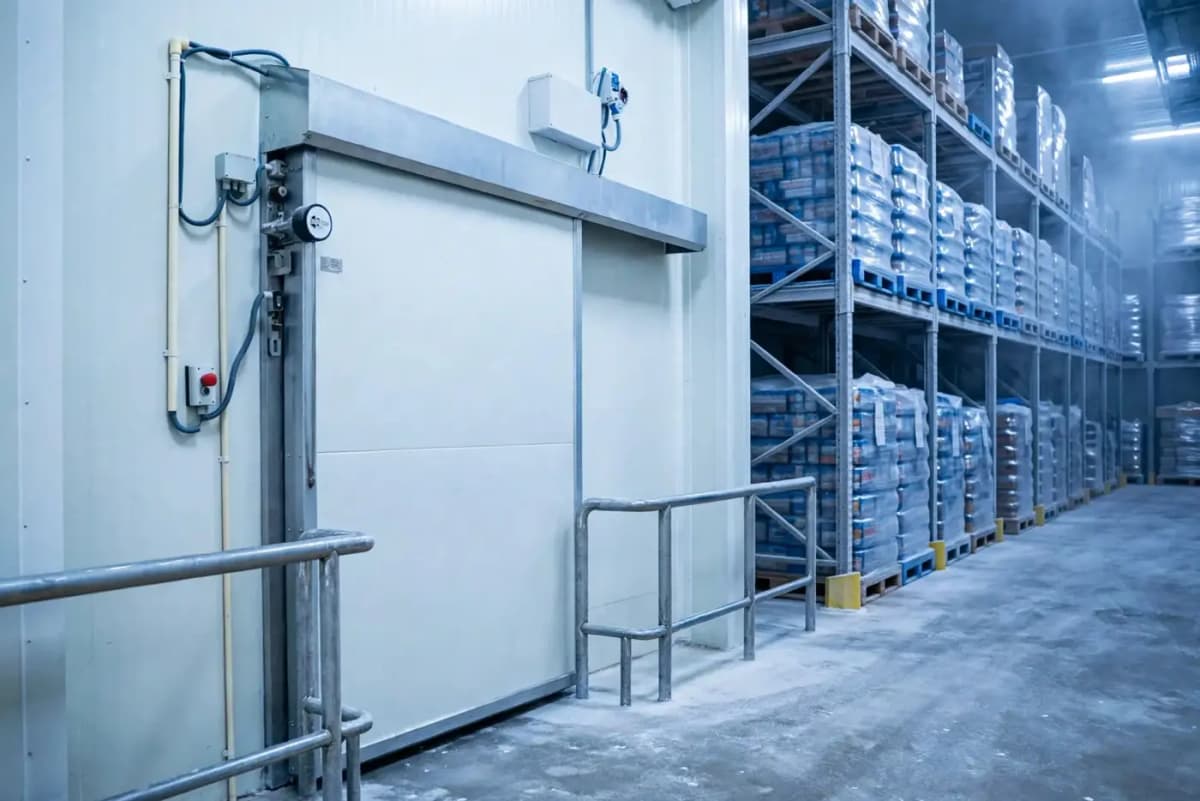
Cold-Chain Doors
Egis FrostGlide F120
- Sliding door system
- Airtight sealing
- Low-temperature duty
- Completely smooth finishing
Insulated freezer sliding door rated to -28 C, with a 120 mm core, heated frame and threshold heating to stop ice build-up.
View specifications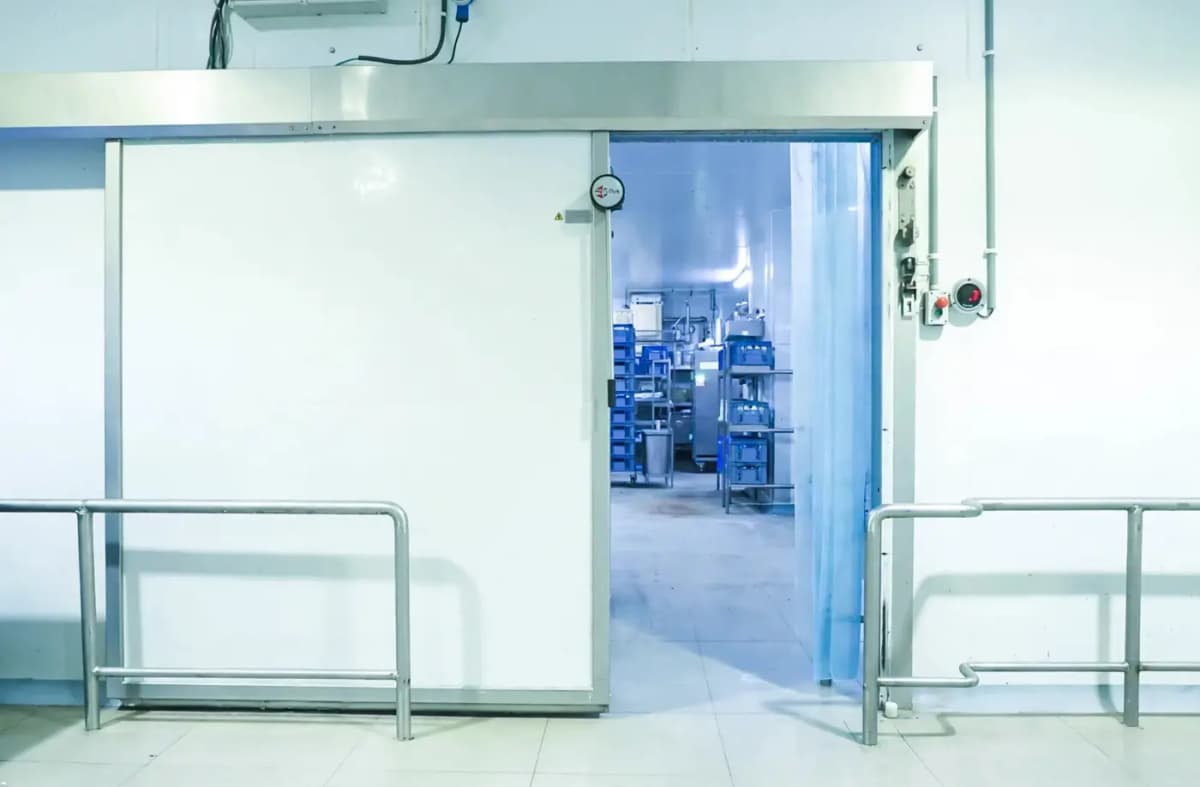
Cold-Chain Doors
Egis ChillGlide C80
- Sliding door system
- Airtight sealing
- Low-temperature duty
- Completely smooth finishing
Insulated sliding door for chiller rooms from 0 to +15 C, with an 80 mm polyurethane core and fast automatic operation.
View specifications